Thursday, April 30, 2015

MUST READ: Abraham Lincoln’s letter to his son’s teacher.....@Travelsnaija @WaleAdetarami

                                                                   Abraham Lincoln

He will have to learn, I know, that all men are not just, all men are not true. But teach him also that for every scoundrel there is a hero: that far every selfish politician, there is a dedicated leader.

Teach him that for every enemy there is a friend. It will take time, I know a long time, but teach, if you can, that a dollar earned is of more value than five of found.

Teach him, to learn to lose... And also to enjoy winning. Steer him away from envy, if you can, teach in the secret of quiet laughter.

Teach him, if you can the wonder of books... But also given quiet time wonder the eternal mystery of birds in the sky, bees in the sun, and flowers on the green hillside.

In a school, teach him, it is far more honorable to fail than to cheat.

Teach him to have faith in his own idea, even if anyone else tells him they are wrong.

Teach him to be gentle with gentle people and tough with tough.

Teach him to listen to all men... But teach him also to filter all he hears on a screen of truth, and take only the good one that comes through.

Teach him, if you can how to laugh when he is sad. Teach him there is no shame in tear.

Teach them to sell his brawn and brain to the highest bidder but never to put a prize tag on his heart and soul.

Teach him gently, but do not cuddle him, because only the test of fire makes the fine steel.

Teach him always to have sublime faith in himself because then he will always have some sublime faith in mankind.

These are big orders, but see what you can do. He is such a fine fellow, my son...

Friday, April 24, 2015

How PDP Leaders Betrayed Jonathan

                                                               Image result for jonathan
                                                               President Jonathan
Further details emerged at the weekend as to the factors that informed the decision of top bigwigs of the Peoples Democratic Party (PDP) to betray President Goodluck Jonathan at the just-concluded March 28 presidential election.
Insiders in the party said at the weekend that the “age factor” played a major role in forcing a number of the top echelons of the party to drop their guards at critical points and in some cases allow some untoward things happen to the votes.
A source described the “age factor” as the age-related campaign mounted by the PDP in a bid to checkmate president-elect, General Muhammadu Buhari.
It was learnt that in a bid to draw attention to the fact that a 73-year-old should not be allowed to preside over Nigeria’s affairs, the PDP went too far and in the process forced its chieftains into believing that there would be no hope of being allowed to contest the presidential election in 2019.
According to sources within the party, constant references to the fact that the PDP believes in the younger generation and that it would ensure that those to take over from Jonathan would be younger than him alienated a number of chieftains who immediately lost interest in mounting a vociferous campaign.
A source stated that President Jonathan himself played into the hands of those who betrayed him when he repeatedly mentioned the age factor and the role age would play in determining his successor in 2019, if he succeeds in winning the 2015 election.
According to the calculations, President Jonathan’s declaration would automatically disqualify the like of Vice-President Namadi Sambo; Jigawa State governor, Alhaji Sule Lamido; Governor Muazu Babangida Aliyu of Niger State, Senate President David Mark, National; Chairman of the PDP, Alhaji Adamu Muazu  and the Governor of Bauchi State, Isa Yuguda from the 2019 race.

It was learnt that following repeated mentioning of the age factor, the camps of many bigwigs became jittery and lukewarm towards the Jonathan campaign, thus paving the way for the All Progressives Congress(APC) candidate.Though Governor Aliyu said last week that Jonathan’s refusal to respect  the single term pact he had with the governors led to PDP’s defeat, information gathered at the top hierarchy of the part have confirmed the real issues.
“I was with one of the top brass during the campaign, and I saw his countenance when the president mentioned the issue of age and suggested that the PDP would ensure the emergence of a younger successor for him if he wins the 2015 election. I recall the man was cold and that was the way it affected all other chieftains, who began to feel what would be in the offing for them if they frontally backed Jonathan to the Presidency in 2015,”a source said.
The source stated that Aliyu could not be trusted, because he was in Lagos to attend the PDP Governors’ Forum meeting a week before the election and canvassed for his re-election at the meeting.
Meanwhile, some other conspiracy theories have started trending at the weekend revealing the grand plot that knocked Jonathan out of the contest.
A document entitled: “Let them know that we know” indicated that alleged massive conspiracy that led to Jonathan’s ouster.
The document read in part: “In a gradual process, we will say things the way they were, we will speak of the conspiracy that even the closest ally of President Jonathan entered into in the dark against our people.”
The document alleged that the result from Bauchi State was at a stage reading 457,786, for APC and 559,897 for the PDP but that when the anti-Jonathan agenda was allegedly ignited, the figures changed.
It made similar allegation about Kano, indicating that the PDP had scored close to half a million votes and was closely trailing the APC before things purportedly changed.

Thursday, April 23, 2015

We’ll regain power in 2019 –PDP

                                 National Chairman, Peoples Democratic Party, Alhaji Ahmadu Adamu Mu'azu
                                                                  Adamu Muazu

 Barely a month after its defeat by the All Progressives Congress, the   Peoples Democratic Party on Wednesday vowed to regain power in 2019.
To achieve this,   members of the National Working Committee and state chairmen of the party have resolved to work together.
The APC won the March 28 and April 11 elections by producing Nigeria’s next President in the person of Muhammadu Buhari   and a majority of the state   governors.
The APC also won most of the seats in the National Assembly and state Houses of Assembly.
Rising from a   meeting in Abuja on Wednesday, the NWC members led by the National Chairman of the party,   Adamu Mua’zu, and the state chairmen   agreed to adopt strategies towards winning the elections in 2019.
The PDP’s resolve was contained in a joint statement issued at the end of the meeting by the Vice-Chairman of the party in the North-West,   Ibrahim Kazaure, and the Benue State Chairman,   Emmanuel Agbo.
The statement read in part, “The meeting resolves to give all necessary support to the national leadership of the party under the chairmanship of Adamu Mu’azu to enable them to re-engineer and rebrand the party for the task of regaining power by 2019.
“The meeting notes the outcome of the 2015 general elections and accordingly resolves not to allow the temporary setback affect the party’s contributions to the democratic development of the country.
“The meeting notes and appreciates the patriotic stand taken by President Goodluck Jonathan after the elections as another milestone in the party’s contributions to peace, stability and progress of the nation.”
The statement said that the meeting also decried what it called the   “widespread anomalies and irregularities” that it said characterised the general elections in many states to the disadvantage of the PDP.
It added that the party had   resolved “to give full backing to the various pursuits of redress in this regard within the ambit of the law and tenets of democracy.”
The meeting therefore directed all its candidates who believed that they were short-changed to channel their grievances through their state chairmen.
It also agreed to resist     “undue harassment, witch-hunt and any form of intimidation or undemocratic tendencies from the opposition aimed at bringing down members of the PDP psychologically.”
It claimed that it had noted the subterranean moves by the APC to undermine the structures of the PDP across the country with the sinister motive of imposing a one-party state on the polity.
The meeting cautioned   Buhari   against any action or inaction that could threaten or erode the gains of democracy and personal freedom that had been established in the last 16 years by the PDP.
It   added that the NWC members and the state chairmen resolved to galvanise the structures of the PDP   and give full support to   the party’s candidates for the supplementary governorship elections in Abia, Taraba and Imo states.
According to the statement, the meeting also charged the Independent National Electoral Commission and other stakeholders involved in the supplementary elections to be forthright, transparent and ensure that the will of the people in the three states were not in any way subverted.
The meeting   resolved to set up special committees on the repositioning of the party.
The National Publicity Secretary of the APC, Alhaji Lai Mohammed, refused to react to the PDP claims on Wednesday.
Mohammed said the APC would not dignify the PDP’s boast with an answer. “No comment,” he said.
Meanwhile, the Independent National Electoral Commission has inaugurated a 12-member committee to produce a comprehensive report on the   general elections.
At a brief ceremony at the commissions headquarters in Abuja,   the Chairman of INEC, Prof. Attahiru Jega, urged the members of the committee to produce “an excellent report” before June 30, 2015, which marks the end of tenure of the present commission.”
Jega, who asked the members of the committee to give their full commitment to the job ahead, assured them of his full support in order to facilitate effective execution of the assignment.
The committee, which draws its membership from across INEC’s departments, is chaired by the National Commissioner in charge of the Information and Voter Education Committee,   Chris Iyimoga.
Responding, Iyimoga appreciated the commission for the opportunity to serve and expressed confidence that the members of the committee, given their pedigree, would produce an excellent report within the time frame given.
Members of the committee are   M.J Kuna, Okey Ndeche, the Chief Press Secretary to the chairman of the commission,   Kayode Idowu;   Nick Dazang, Chima Duruaku and Okechukwu Ibeanu.
Other are Fatu Ogwuche, Nnamdi Nweze, Aminu Idris, Shehu Wahab   and   John Irem , who will serve as   the secretary.
 

Photos: Vehicle Knocks Down Motorcycle At Ikorodu Road, Kills Rider & Passenger On The Spot

             
A motorcycle rider and his passenger were killed this morning by Anthony bus stop on Ikorodu road when a vehicle knocked them down on the highway. According to an eyewitness who shared the photos, the rider and the passenger died on the spot. It will be recalled that the Lagos State Government has warned okada riders to desist from plying highways. May their souls rest in peace. See their bodies after the cut.


By Ben Agande
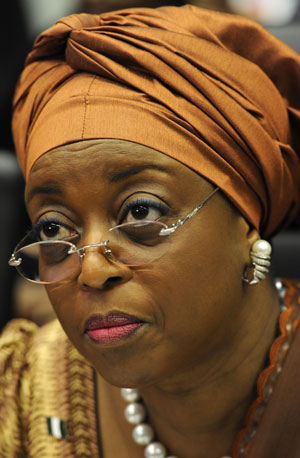
Abuja—Minister of Petroleum Resources, Deziani Allison Maduekwe, has denied media reports that she was seeking asylum in some foreign countries.
Diezani Alison-Madueke
Addressing state House correspondents after yesterday’s Federal Executive Council, the Minister said she was not leaving the country, adding that she had no reason to do so.
She blamed what she described as consistent malicious and libellous attacks on her person on the reforms she brought about in the oil and gas sector in the country.
The minister said: “Let me state it clearly for the records that Nigeria is my country and am not going anywhere. I love my country and I do think that I have done the best for my country and I would also like to point out that these malicious, malevolence, vindictive libels coming out of places like Osun Defender and other faceless online and other entities need to stop.
“For everything that has a beginning there is an end and that is not a surprise. What is the surprise is the sort of malevolence bordering on personal malicious libel to my person during this period of time.
‘’I do believe that I have done the best for Nigeria in this job and I have attained many firsts in the history of oil and gas, especially in the reforms that we have done. In this period of time, I have stepped on many big toes, particularly the feet of the cabal in the industry when we came in.
‘’I have said severally that we will open up the industry to all Nigerians and we have, but that is not to the pleasure of certain cabal.   And I have been continuously maligned because of this and we have taken millions and in fact, billions of dollars out of the hands of multinationals and their sub-contractors and put them in the hands of Nigerians through Nigerian content.
‘’Hundreds of thousands of Nigerians have come into the oil and gas industry because of our reforms.
“Quite frankly, I think as unprecedented as it is, it does not please everybody and that cannot be helped, but let us remember the unprecedented reforms that have happened in the oil industry during our time, such as major gas reforms, the Petroleum Industry Bill, which has been completely revised, reformed and put into the hands of members of the National Assembly where it has languished for two years.”
On allegation that she was seeking the intervention of prominent Nigerians, especially former Head of State, General Abdulsalami Abubakar, to protect her from being held accountable for some of her actions in office, the minister said there was no truth in the allegation.
She said: “I believe that Gen. Abdulsalami)  has already called it unnecessary mischief.”
- See more at: http://www.vanguardngr.com/2015/04/diezani-madueke/#sthash.vatlbQHQ.dpuf

Police shot kidnapper dead while picking N3m ransom

A suspected kidnapper, Niyi Omosola, has been shot dead by the police in the Epe area of Lagos. PUNCH Metro learnt that Omosola was shot dead during a rescue operation by the police to free a victim, identified simply as Kudirat. It was gathered that Omosola, while collecting the ransom, sighted the police and decided to escape on a motorcycle when the operatives fired him. It was gathered that Omosola, who hailed from Ondo State, allegedly led a gang which kidnapped the woman in the Elemoro, Ajah area...
Sixty-two-year-old Kudirat was reportedly abducted by the gang on Thursday, April 16, at about 7pm.

Our correspondent learnt that Kudirat, a businesswoman, was inspecting the construction work at a petrol station she owned in the area when the kidnappers swooped on her and took her away.

It was gathered that the gang later contacted the family and demanded a ransom of N50m. However, after negotiation, our correspondent learnt that the the gang and the family agreed to a ransom of N3m.

PUNCH Metro learnt on Wednesday that Kudirat’s brother, who had been communicating with the gang, took the ransom to an agreed hideout in the Epe area.

However, a team of operatives led by the Special Anti-Robbery Squad Commander, Abba Kyari, was said to have trailed Kudirat’s brother to the hideout.

A police source said Omosola, while collecting the ransom, initially opened fire when he sighted the police.

He added that when the kingpin saw that he was outnumbered, he tried to escape on a motorcycle, leaving the policemen with no choice than to fire him.

He said, “The kidnappers are a notorious gang. They had conducted several operations in the area. In the latest incident, they demanded N50m initially, but when the family could not produce the amount, they finally agreed to N3m. They also arranged where the place of meeting would be in the Epe area.

“The police trailed the brother, who was taking the money to Epe, where Omosola was waiting. Immediately he collected the ransom, he suspected that policemen were around and he began to shoot sporadically.

“He got on a motorcycle and was riding off when he was gunned down. He did not die immediately.”

PUNCH Metro learnt that Omosola, who was injured, led the SARS operatives to a bush between Epe and Ijebu Ode, where the woman was held.

When the police arrived at the hideout, his gang members had reportedly fled the place.

It was gathered that Kudirat was rescued alive by the police, while Omosola eventually died from the gunshot injuries.

The Police Public Relations Officer, DSP Kenneth Nwosu, said efforts were on to apprehend the remaining gang members.

He said, “When the information was received, the operatives trailed the gang to the location.

“The kidnap kingpin actually fired at SARS operatives, who were carrying out the rescue operation, and they fired back. In the process, he was fatally wounded.

“The woman has been rescued, while the corpse has been deposited at a public morgue.

“Efforts are being intensified to arrest other fleeing members of the gang.”

Tuesday, April 14, 2015

The 9 Biggest Political Casualties Of The 2015 Nigerian General Elections By Carlhz Chinedu

The April 11 Gubernatorial and State Assembly elections have come and gone, bringing to an end over 12 months of rigorous electioneering and scheming. Winners have emerged and the also-rans are counting their financial and political loses. Some losers, however, were obviously worse affected than others. Below is a compilation of the biggest casualties of the March 28 and April 11 political hurricanes.
                                             
Mua'zu Babangida Aliyu: The Niger State "Chief Servant's" woeful performance at both the March 28 and April 11 elections has called into question his supposed status as a force to be reckoned with in the Nigerian political equation. The long-serving Chairman of the Northern States Governors' Forum (NSGF) not only failed to "deliver" his state to the PDP's Goodluck Ebele Jonathan in the Presidential Polls and in his bid to ensure that his anointed candidate, Umar Nasko, succeeds him at the Minna Government House, but he also fluffed in his quest to represent the Niger East Senatorial Zone in the 8th Senate. It's really been a season of reality checks for the once-influential governor, a politician who was reportedly being groomed by some power brokers in the North to succeed Goodluck Ebele Jonathan come 2019. He was even widely quoted in the local press few weeks ago as saying that he intends to "mark time" in the Senate while he awaits the 2019 General Elections when he would take a shot at the country's top job. All that is up in the air now. As it stands, instead of waiting in the senate, he will be marking time at home while he counts his loses and plans his next political move.
Lagos PDP: These are not the best of times for the PDP nationwide, more so in Lagos state. The party's huge losses at the polls is made much worse by the fact that Lagos state is the de facto nerve center of the APC. Depending on how the APC goes about governing both the country and the state, the once-dominant PDP may be reduced to oblivion. The PDP's sudden loss of prominence will definitely instigate a flurry of realignments and defections into the new ruling party. The losses will be asphyxiating no doubt, but the PDP's continued survival and robustness in Lagos state is crucial for the democracy over there, else the "Center of Excellence" runs the risk of becoming a one-party state where no-one dares question or check the excesses of the ruling party. Four years is not eternity; 2019 is not as far as it seems. There's enough time between now and then for the party to rediscover itself and mount a greater challenge.
David Mark and Gabriel Suswam: Not even the combined might of a two-time Senate President and an incumbent governor could stop the APC from snatching a hard-fought victory in Benue state. The PDP's latest defeat in Benue didn't come as a surprise to many this time around, following its shock loss in the state at the presidential polls. The party's overall poor showing at the National Assembly elections will almost certainly cost David Mark the presidency of Nigeria's Upper Legislative Chamber — a position which he has held since 2007 — while Governor Suswam's running battle with the Benue state civil servants has cost him both a ticket to the 8th Senate and a governorship ticket for his anointed candidate, Terhemen Tarzoor. What becomes of both men in the Nigerian political arena come the next administration is anyone's guess.
Nuhu Ribadu: The revered former anti-corruption boss' sojourn into the murky waters of politics has so far not been fruitful. He contested and lost the 2011 Presidential elections on the platform of the ACN to the PDP's Goodluck Jonathan. In 2014, he controversially defected to the PDP from what had morphed into the APC with hopes of contesting on the platform of the PDP and probably winning the Adamawa state gubernatorial election. However, it was not to be. He was gifted the opportunity of running for the office, but he was always doomed to fail, following alleged anti-party activities and sabotage by members of his own party. This culminated in a comprehensive defeat on April 11, where he finished in an embarrassing third place.
Chibuike Amaechi: His party may have been victorious at the Presidential polls, but it's been a pyrrhic victory for the APC chieftain. His failure to "deliver" his state to the All Progressives' Congress a fortnight ago was partially overlooked and forgiven amidst the euphoria surrounding their triumph at the national level, but April 11's heavy defeat will not go unnoticed. The Director-General of the APC Presidential Campaign Council could do little as his party was trounced in a state where he is the governor, at the hands of the his arch rival, the Dame Patience Jonathan-backed Nyesom Wike of the PDP. Amaechi may be an integral part of the incoming APC-led federal government, but back home in the South South, his influence has been significantly whittled down.
Namadi Sambo: Even his status as the incumbent Vice President and a one-time governor of Kaduna could not ward off a heavy loss for his party in his home state. Though no-one really expected him to "deliver" the North — or even the North West  — to the PDP, the low-key and ever-smiling Vice President should have brought much more to the table in the March 28 and April 11 elections than he ended up doing.
Adamu Mu'azu: This has been the People's Democratic Party's worst performance since its inception in 1998, prior to Nigeria's return to civilian rule. Every organization has a leader whose responsibilities are to manage its affairs and accept culpability for the outcomes of his managerial decisions and tactics, especially when they are negative. In this instance, Mu'azu (branded the "Game Changer" by his PDP colleagues) must shoulder the blames for his party's disastrous outing in the just-concluded polls, though it was not entirely of his own making. Under his watch, the PDP lost several states where it was once dominant, including Plateau, Niger, Adamawa, Benue, Katsina and Kaduna (Abia will also likely be lost to APGA),  and it put up a limp performance in Opposition-controlled states where it was expected to do much better, including Oyo, Ogun, Nasarawa, Kano, Kwara, Sokoto, Lagos and Bauchi, his home state. Considering the amount of resources that was poured into the 2015 general elections by the PDP, the end product has been nothing short of disastrous.
Goodluck Ebele Jonathan: He's, without a doubt, the biggest loser here, yet the manner in which he quickly conceded defeat and saved the country another round of senseless bloodshed has made him victorious in defeat. His political miscalculations, faux pas, misguided appointments and perceived leniency towards corruption all conspired to make him the first incumbent Nigerian Head of State to lose a presidential election. That notwithstanding, His Excellency deserves our dispassionate commendation for overseeing one of the most peaceful and successful elections in Nigeria's history, even in the face of intense pressure to manipulate the process.
Carlhz Chinedu is a sociopolitical commentator and a social justice activist.

Tuesday, April 7, 2015

Femi Aribisala: How Jega defeated Jonathan for Buhari in the election

              Femi Aribisala

 If you did not see my column last week, it was because I did not want to rain on anyone’s parade. I wanted the euphoria over the bullet we missed by avoiding the riots that would have ensued had the APC been defeated to subside. But I am now back to tell you that the presidential election was a big INEC rigmarole. Long before Jonathan lost the election to Buhari, he had been defeated by the machinations of Jega and INEC.

As a matter of fact, General Buhari did not win this presidential election: President Jonathan lost it. The president lost because he allowed himself to be defeated. Maybe he did not want to remain in power badly enough. Or maybe there was a side of him that felt there is honour in being the first incumbent president to lose an election in Nigeria. Whatever the case; he failed to heed the warning of many that, like Aminu Tambuwal and Lamido Sanusi, Attahiru Jega was working for the enemy.
Failure of Tinubu
With the coalition of Bola Tinubu’s ACN and Buhari’s CPC, many concluded that the outcome of the 2015 presidential election would be determined in the South-West. The assumption was that Tinubu would provide the killer-punch that had been missing in Buhari’s earlier failed attempts. However, this has proved to be mistaken. Tinubu failed to clean up the South-West with his broom for the APC. Indeed, in order for the APC to prevail in Lagos with only 160,000 votes, INEC had to ensure that many non-indigenes could not get their PVCs.
The truth of the matter is that, quite apart from the shenanigan of having a Redeemed Yoruba pastor as Buhari’s vice-presidential running-mate, the people of the South-West don’t like Buhari. In the 2011 election, they said this emphatically by giving him a paltry 321,000 votes out of the 4.7 million cast in the geopolitical zone. This time, in 2015, Buhari received 2.4 million South-West votes, with a plurality of 600,000 over Jonathan. However, most of those votes were actually not for Buhari: they were against Jonathan.
In the end, the South-West vote was neither pivotal to Buhari’s victory nor central to Jonathan’s defeat. Tinubu’s assistance for Buhari ended at the APC presidential primaries where he got Buhari nominated against the wishes of Northern delegates. All Tinubu did at the level of the presidential election was to give a façade of national spread to Buhari’s essentially Northern victory. This factor will soon come to haunt Tinubu and his South-West cohorts when it is time to share the spoils of victory in the Buhari administration.
Should APC lose the Lagos governorship election, Tinubu would be left in a quandary. All the Northern timber and caliber who were missing in action throughout the campaign when Tinubu, Fashola and other Southern politicians were running helter-skelter with Buhari, will soon come out of the woodwork to claim their Buhari inheritance. Inevitably, they will overshadow the Southern brigade. Vice-President Osinbajo will simply be sent to fetch water when crucial decisions are to be made by Northern “born-to-rule” elements.
Southerners without coattails
In order to defeat the PDP, APC needed to undermine Jonathan in his areas of greatest strengths – the South-South and the South-East. However, APC men like Amaechi, Okorocha and Oshiomhole proved to be paper-tigers in these areas. In Rivers, Amaechi was disgraced. With all his bluster, he could only deliver 69,000 votes to Buhari; while Jonathan made off with a whopping 1.45 million. No wonder, therefore, that the governor tried to save face by saying there was no election in Rivers. He even rented a crowd to go on a perfunctory demonstration.
Chinem Bestman sent me a text message from Port Harcourt with the same complaint that the election was rigged. I answered by asking him if there has ever been a free and fair election in Rivers since 1999. Amaechi knew the ropes, therefore when he came for accreditation, he asked to see the election result sheet. He knew the traditional rigmarole in Rivers was to doctor the report sheet. Now that he has been out-rigged, he is singing a different tune; asking Rivers people to forgive him.
In Imo, Okorocha was humiliated. He could only deliver 19% of the vote to Buhari. It looks like the governor is going to need another job very soon as he is unlikely to be re-elected. In Edo, Oshiomhole did much better. APC lost with 208,000 votes to PDP’s 286,000. Nevertheless, Oshiomhole tried to explain this away by complaining that PDP used the military to manipulate the election. However, when INEC announced the results, APC won the senatorial election in Edo North; one of the places where the governor claimed PDP used the military to rig.
Assault on the South-East
Godsday Orubebe grabbed the microphone during the collation of the election results and alleged to the whole world that INEC chairman Attahiru Jega is partial and tribalistic. His outburst may have been embarrassing, but it is not entirely without justification. The evidence of INEC’s partiality is compelling. Although President Jonathan put a call to Orubebe to stop his protest, and he has decided to accept the verdict of INEC, that does not mean we should sweep INEC’s shenanigans under the carpet.
It is easy to fob off Orubebe by saying he was only being emotional because he is a PDP man from Niger Delta, a kinsman of Mr. President who “lost” the election. That just won’t cut it. I am not a Niger Deltan. I don’t belong in the PDP. I don’t know Goodluck Jonathan and I have never ever met him or spoken to him. Cynical Nigerians believe anyone who supports Jonathan must either be in his pay or be looking for a job. Neither allegation is applicable to me. Jonathan ostensibly received 12.8 million votes; surely all these people were neither in his pay nor Aso Rock job-seekers.
My faith requires me to support the weak. Therefore, I will always support the minority against the tyranny of the majority. We cannot be reliant on South-South oil in Nigeria and then treat one of their sons as if he is an impostor for being president of the country. The fact of the matter is that this presidential election was the result of a vicious and malicious gang-up of the majority ethnic groups against the minorities.
Since the civil war, the Igbos of the South-East have been treated as if they are a minority ethnic group in Nigeria when in fact they are one of the majorities. In order to diminish Jonathan’s votes, a major assault was made against them; recognising that they are some of the staunchest Jonathan supporters. In 2011, the Igbo gave Goodluck Jonathan a decisive 5 million votes. The task of INEC in 2015 was to ensure that did not recur.
INEC rigmarole
Buhari prevailed as a result of a deliberate disenfranchisement of the Igbo by INEC through the manipulation of PVC distribution and the failure of the card reader in the South-East and the South-South. INEC ensured that, far more disproportionately and relative to other geopolitical zones, millions of South-East voters disappeared between 2011 and 2015, in order to provide a smooth passage for a Northern presidential candidate; which turned out to be Buhari.
The first strategy of INEC in this regard was to create 29,000 additional polling units, allocating 21,000 of these to the North and only 8,000 to the South. In this crass manipulation, INEC gave more additional polling units to Abuja than it gave to the entire South-East. However, widespread outcry over this proposal forced INEC to jettison it despite protracted resistance by Jega.
But INEC had a plan B: the registration of voters and the collection of PVCs. This was bogus and lopsided; skewed most especially against the South-East where only 7.6 million were registered and 5.6 million PVCs collected. Compare this with the war-torn North-East: 9.1 million were registered and 7.4 million collected. But the most outrageous were the figures of the North-West. 17.6 million registrations and 15.1 million collections were recorded in the North-West; much more than the figures in the entire South-East and South-South combined.
On Election Day, news of a bomb blast in Enugu served to discourage people from coming out to vote in the South-East. In addition, there was widespread late voter accreditation and voting in the South-East as well as the South-South. One reason for this was the massive failure of the card-readers in these zones, highly suggestive that they were programmed to fail there.
Quite incredibly, the card-reader failed to recognise even the president. It took President Jonathan 35 minutes to get accredited; but within five hours, we are meant to believe that 2.5 million voters in Kano were duly accredited. In the middle of the election, INEC changed from card-reader to manual accreditation. This suddenly brought into play the huge voter registrations in the North-West. Cell-phone video recordings showed many of the North-West’s bloated PVC holders to be under-aged children.
Abracadabra
The total effect of these machinations is that over 2.4 million South-East voters were successfully disenfranchised. 38 million people nationwide voted for Buhari and Jonathan in 2011. In 2015, this figure shrank to 28 million. The votes of the South-West remained virtually constant. 4.6 million people of the South-West voted in 2011: 4.2 million in 2015. But compare this with what happened in the South-East. 5 million people voted in 2011, only 2.6 million in 2015. That is a drastic drop of 2.4 million.
While Kano, Katsina, Kaduna, Jigawa and Bauchi were posting their traditional humongous figures; Imo, Anambra and Abia were posting relatively disappointing figures. Jigawa used to be a part of Kano, when Kano was said to be bigger than Lagos. In the 2015 election, the votes of Jigawa and Kano combined was double that of Lagos. Lagos had 1.4 million votes. Jigawa and Kano had 3.1 million; virtually all for Buhari.
 While the internally displaced Northerners in the North-East could vote, internally displaced Igbos from the North could not. In places like Lagos and Kano, many non-indigenes were not even given their PVCs. In effect, the innovation of the Permanent Voters Cards is designed to permanently disenfranchise the South. If this is not redressed immediately, the North will always determine the winner in Nigerian elections.